Centering Well-being in the Transition to Adulthood
Well-being refers to an overall sense of thriving and personal agency across various areas of life, including physical, emotional, social, financial, and occupational. It is a sustainable state that contributes to their mental health, life satisfaction, and enthusiasm for the future. Individuals with learning disabilities (LD) may experience additional obstacles and risks to a healthy overall sense of well-being due to individual and systemic factors.
The National Center for Learning Disabilities’ (NCLD) research explores factors determining a path toward “thriving” or merely “surviving,” among young adults with LD in their transition to adulthood.
Take a look inside the State of LD
In NCLD’s national survey on navigating the transition into adulthood, young adults with LD often reported feeling satisfied with different aspects of their overall sense of well-being:
- 68% felt good about their lives
- 72% about their careers
- 78% about their futures
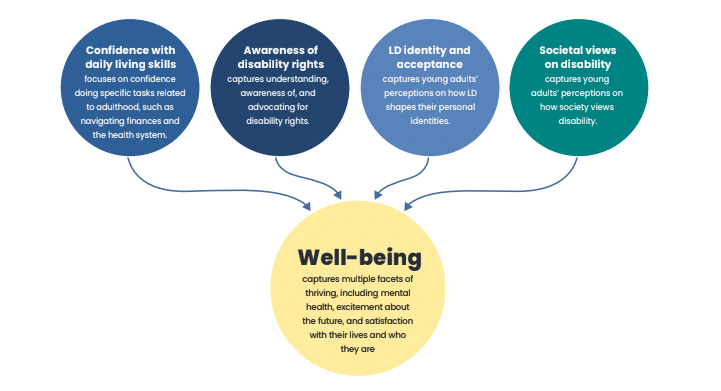
Nearly 71% felt positive about their mental health, and 66% about their personal independence. Critical factors influencing their well-being include confidence in daily living skills, awareness of disability rights, LD disability identity and acceptance, and societal attitudes toward individuals with disabilities*.
Confidence with Daily Living Skills
For young adults with LD, confidence in their ability to manage everyday tasks was a critical factor shaping their overall well-being. Most respondents expressed confidence or a fair level of confidence in their daily living skills. However, many felt less confident when it came to handling their finances and maintaining their mental health. This may be caused or exacerbated by reported barriers to accessing healthcare and to having the financial means to independently afford basic necessities without public or private help (e.g., government, family, charity, or scholarships).
- 13% do not have health insurance
- 19% were able to afford healthcare without assistance
- 30% were able to afford housing without assistance
- 53% were able to afford groceries without assistance
Awareness of Disability Rights
Greater awareness of and comfort advocating for disability rights was related to a more positive sense of well-being for young adults with LD. A majority of young adults with LD reported being aware of their disability rights and confident in advocating for their rights, indicating a strength in the LD community.
- 72% knew how to access information about their disability rights
- 77% felt comfortable advocating for their rights
- 82% were aware that they had certain rights and protections because they had a disability
LD Identity and Acceptance
The extent to which individuals with LD accepted their disability and viewed disability as a positive aspect of their identity influenced their overall well-being. While a majority of respondents accepted that their LD was a part of them, young adults were divided when it came to having positive feelings about having an LD.
- 49% felt proud to have an LD
- 54% believed that their disability had a positive impact on them
- 76% of respondents believed that having an LD was a part of who they are
Societal Views on Disability
When young adults with LD perceive greater societal stigma or discrimination related to disability, their overall well-being may suffer. Respondents generally agreed that individuals with disabilities faced societal stigma and discrimination.
- 68% believed that individuals with disabilities face discrimination
- 68% felt that people without disabilities become impatient with people with disabilities
- 57% felt that society fails to accommodate individuals with disabilities
Key Takeaways
Addressing these four factors is crucial for the long-term success and quality of life for individuals with LD.
Here’s what you can do to support individuals with LD
Self Advocates
- Engage in positive disability culture: This could include following disability civil rights groups, joining local community groups, consuming disability-focused media, and finding role models within the disability movement.
- Seek support when you need it. Know that you are not alone in needing support or assistance with managing the everyday tasks of adulthood. Utilize assistance and resources when they are available, including courses offered by local community colleges or organizations.
- Learn more about your rights under IDEA, the ADA, and Section 504, and practice advocating for yourself with a trusted person. Check out this practical guidance on self-advocacy from a young disability advocate.
Families
- Promote self-awareness and self-advocacy: Acknowledge your child’s disability openly and honestly. Help your child understand their disability and offer a safe environment for them to explore the impacts of their disability. Encourage your child to practice naming and asking for what they need from educators, friends, or employers.
- Seek mentorship and opportunities for your child to practice daily living skills: Connect your child with other disabled adults or peers through formal or informal mentorship. Utilize available community supports and trainings to help your child build confidence in daily living skills.
Communities & Practitioners
- Educate your community to dispel the stigma associated with disability: Offer training and professional development to help individuals with and without disabilities understand and address misconceptions related to disability. Topics could include disability identity, inclusive pedagogy, and how to identify and challenge implicit biases.
- Provide opportunities for individuals with LD to voice their needs in educational settings: Involving them in the IEP process, student-led projects, and transition planning can not only empower individuals with LD but also reduce stigma and promote understanding in the school community.
- Provide training and support in daily living skills for individuals with disabilities: When possible, incorporate life skills into pre-existing curriculum while making learning experiential and varied across subjects.
State & Federal Policymakers
- Allocate funding for disability cultural programming: Fund both school-based and larger community educational opportunities that highlight various disability experiences. Consider providing funding for training that facilitates parents’ understanding and confidence in supporting their child’s needs.
- Invest in school-based mental health services grants, student support, and academic enrichment grants: Title IV of the Every Students Succeeds Act (ESSA) funds School-Based Mental Services grants which include money for comprehensive school mental and behavioral health service delivery systems promoting wellness, resiliency, motivation and engagement, skill-building, and self-advocacy skills.
Stay informed and learn more about NCLD’s research findings here.
* This finding was obtained using structural equation modeling, where factors relating to (1) confidence with daily living skills, (2) awareness of disability rights, (3) learning disabled identity and acceptance, and (4) societal views of disability were found to be significantly related to well-being status. Read the full report to learn more.